
(And What to Do About It)
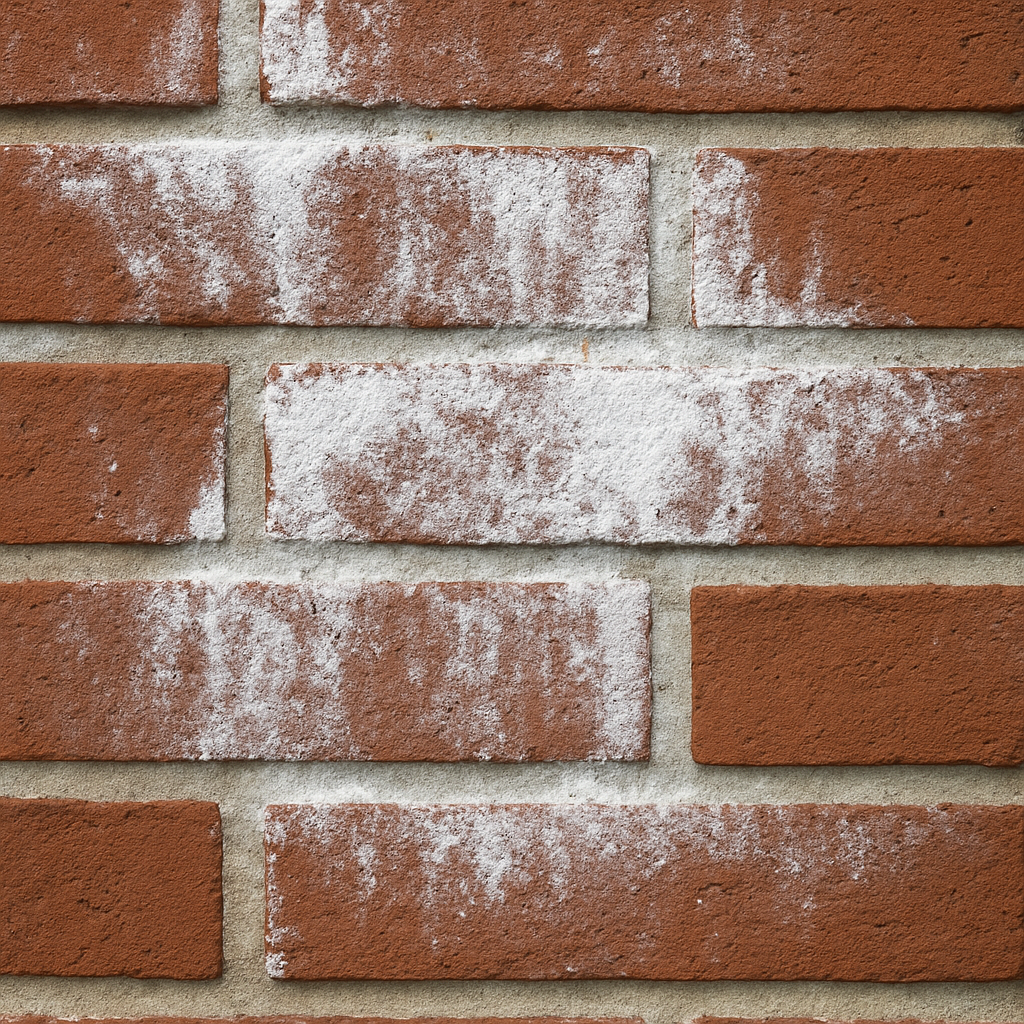
If you have ever looked at your brick wall or steps and noticed a strange white coating, almost like the surface was dusted with flour or chalk, you are not imagining things. This is not regular dirt or dust. What you are likely seeing is something called efflorescence. It shows up on bricks, mortar, and concrete surfaces all over Milwaukee, especially in the springtime or after a particularly wet season.
At first glance, it might not seem like a big deal. You might think it just needs a quick scrub. But efflorescence can be a red flag. It means water is getting into places it should not be. And when it comes to masonry, moisture is never a small issue. It is the beginning of a long list of potential problems if left unchecked.
What Is Efflorescence, Really?
Efflorescence is the technical term for the white powdery residue that appears on masonry surfaces. It is made up of salts that naturally occur in brick, mortar, and concrete. When moisture gets into these materials, it dissolves the salts. Then, as that water travels to the surface and evaporates, it leaves the salts behind as a visible stain.
This process can happen any time of year, but in Milwaukee, it is especially common during spring. After the snow melts and temperatures bounce above and below freezing, your masonry expands, contracts, absorbs water, and then dries out. That is when the salt migration happens most often. It is not dangerous to touch, and it is not mold, but it does indicate something important. Your bricks are taking on water from somewhere.
Why It Should Not Be Ignored
Efflorescence itself is not going to make your house fall down. It is a cosmetic symptom. But symptoms matter. Efflorescence is a sign that moisture is entering your masonry system, and that is something you should never take lightly. Even small amounts of water over time can lead to:
- Cracking and crumbling mortar joints
- Spalling bricks, where the surface flakes off
- Freeze-thaw damage during Milwaukee winters
- Mold or mildew problems if the wall is connected to your basement
- Rusting of embedded metal supports or anchors
The white stains might go away after a few weeks or come back seasonally, but the underlying moisture problem will not solve itself. Without intervention, it will likely worsen.
Common Sources of Moisture Behind the Problem
Efflorescence does not just happen randomly. Something is feeding it. In most cases, the real issue is not the bricks themselves, but what is happening around them. Here are some of the most common moisture sources we see during inspections in the Milwaukee area:
- Poor drainage around the foundation that directs water toward the home instead of away from it
- Mortar joints that are cracked, worn, or too porous
- Lack of a proper vapor barrier or weep system
- Chimneys that have cracked crowns, broken caps, or missing flashing
- Retaining walls that are not sealed or do not have proper drainage backing
All of these issues allow moisture to seep into the structure. Once that happens, efflorescence is simply the first visible clue.
Can You Just Clean It?
Yes, in some cases you can remove efflorescence with a dry brush or a mild water and vinegar solution. There are even commercial cleaners designed specifically for masonry stains. But that only treats the symptom. It is like wiping sweat off your forehead without addressing the heat.
If you clean the white stains today but ignore what is causing them, they will be back. Possibly even worse than before.
The Right Way to Fix It
The smart approach is to identify where the water is coming from and stop it. That is where an experienced masonry contractor comes in. At Milwaukee Brickwork Brigade, we look beyond the surface. Our team inspects the full moisture pathway to find out whether you are dealing with worn mortar, bad grading, cracks, poor sealing, or something else entirely.
Depending on what we find, the fix might involve:
- Tuckpointing damaged joints to restore the water-resistant surface
- Rebuilding a section of wall or steps that has become too porous
- Applying a breathable masonry sealer that allows moisture out but keeps new water from coming in
- Improving drainage or redirecting gutter downspouts away from vulnerable areas
We never apply sealant until we are sure the wall is dry and breathable. Trapping moisture inside is worse than doing nothing at all. That is why a one-size-fits-all approach does not work when it comes to masonry. Every job is unique.
Final Thoughts: Your Bricks Are Trying to Tell You Something
Efflorescence is your masonry waving a little flag. It is telling you that something is off balance and needs attention. Most homeowners do not realize how vulnerable brick can be when moisture is involved. That is where we come in. With the right attention at the right time, we can restore your brickwork, prevent future staining, and extend the life of your masonry for years to come.
If you are seeing white residue on your brick, call Milwaukee Brickwork Brigade today. We will take a closer look and give you a straight answer about what is really going on—and what to do next.